
 Send Inquiry



 Send Inquiry
Element Shaped Refractory Shapes
Price 38000.00 INR/ Ton
MOQ : 1 Ton
Element Shaped Refractory Shapes Specification
- Purity(%)
- > 94%
- Water Absorption
- Less than 1%
- Form
- Solid Shapes
- Melting Point
- Approximately 1700C - 1800C
- Application
- Furnace lining, kilns, incinerators, foundries, boiler insulation, high-temperature processing equipment
- Chemical Composition
- High alumina, silica, magnesia
- Surface Finish
- Smooth to slightly textured
- Density
- 2.6 Gram per cubic centimeter(g/cm3)
- Hardness (%)
- 85 90% Mohs
- Usage & Applications
- Used in industrial sectors requiring high thermal resistance including steel, glass, cement, and ceramics plants
- Product Type
- Element Shaped Refractory Shapes
- Types of Refractories
- Shaped Refractories
- Shape
- Element Shaped (custom geometric designs, blocks, bricks, special shapes)
- Porosity
- 18% 24%
- Dimensional Stability
- High at elevated temperatures
- Strength
- High Mechanical Strength (up to 80 MPa)
- Specific Gravity
- 2.3 2.7
- Thermal Conductivity
- Low, approx. 0.8 1.5 W/mK (at 1000C)
- Color
- Light grey to off-white
- Bulk Modulus
- Up to 120 GPa
- Abrasion Resistance
- High
- Cold Crushing Strength
- 70-85 MPa
- Refractoriness Under Load (RUL)
- Greater than 1450C
- Thermal Expansion Coefficient
- 5.0 6.5 x 10 /C
- Fire Resistance
- Excellent
- Packaging Type
- Wooden Pallets or as required
- Compressive Strength
- >80 MPa
- Size Range
- Customizable as per requirement
- Service Temperature
- Up to 1700C
Element Shaped Refractory Shapes Trade Information
- Minimum Order Quantity
- 1 Ton
- Supply Ability
- 1 Ton Per Month
- Delivery Time
- 1 Week
Element Shaped Refractory Shapes About
Designing, producing, and trading refractory products by our company, Element Shaped Refractory Shapes is the area of our expertise. It is intended for work in high-temperature environments. The offered product is designed with high attention to detail, resulting in excellent finish and dimensional accuracy. It is commonly used in furnaces, kilns, and reactors. Through precise industrial manufacturing processes and rigorous quality control standards, we are able to provide top-notched Element Shaped Refractory Shapes tuned exactly to specific application requirements.
Product details
|
Material |
WHITE TABULAR ALUMINA / MULLITE |
|
Thermal conductivity |
HIGH |
|
Cavity |
Single |
|
Brand |
UNIVERSAL REFRACTORIES |
|
Grade |
High |
Precision Shaped Refractories for High-Temperature Environments
Element Shaped Refractory Shapes are tailor-made from advanced compositions to withstand extreme thermal and mechanical stresses. Their excellent fire resistance, robust mechanical properties, and low thermal conductivity make them indispensable for high-temperature operational setups like furnaces and kilns. With customizable geometric designs, these shapes provide flexibility for both standard and unique application requirements, ensuring effective insulation and structural endurance.
Customizable Solutions for Diverse Industrial Applications
Available in a range of sizes and surface finishes, these shaped refractories are designed to suit various industrial sectors including steel manufacturing, glass production, cement plants, and ceramics operations. Their adaptability to specialized designs allows producers, suppliers, and service providers to meet specific installation needs, supporting enhanced process efficiency and reduced maintenance cycles.
FAQs of Element Shaped Refractory Shapes:
Q: How are Element Shaped Refractory Shapes manufactured?
A: Element Shaped Refractory Shapes are produced by blending high-purity alumina, silica, and magnesia, which are then formed into custom geometric shapes through pressing or casting. These forms are fired at high temperatures to attain the desired mechanical strength, fire resistance, and density.Q: What are the main benefits of using Element Shaped Refractory Shapes in industrial applications?
A: They provide high thermal resistance, outstanding mechanical strength, excellent fire and abrasion resistance, and maintain dimensional stability, making them ideal for applications such as furnace linings, kilns, and boiler insulation in demanding industrial environments.Q: Where are these refractory shapes typically installed?
A: Element Shaped Refractory Shapes are commonly used in high-temperature process equipment and facilities, including furnaces, kilns, incinerators, foundries, boilers, and reactors, across industries like steel, glass, cement, and ceramics.Q: What is the process for customizing the size and shape of these refractories?
A: Customization involves working with manufacturers or suppliers to specify required dimensions and geometric configurations. Advanced manufacturing techniques are utilized to create blocks, bricks, and special shapes tailored to particular installation and operational needs.Q: When should businesses consider replacing their existing furnace linings with these shaped refractories?
A: Replacement is recommended when existing linings show signs of wear, reduced insulation efficiency, or structural instability. Upgrading to high-performance Element Shaped Refractory Shapes can enhance operational safety and reduce maintenance frequency.Q: How does the low thermal expansion coefficient benefit high-temperature operations?
A: The low thermal expansion coefficient allows these refractories to maintain structure and performance during rapid heating and cooling cycles, reducing the risk of cracking or deformation at elevated temperatures.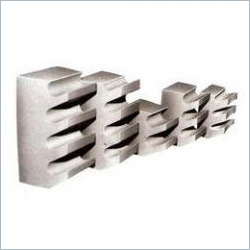
Tell us about your requirement

Price:
Quantity
Select Unit
- 50
- 100
- 200
- 250
- 500
- 1000+
Additional detail
Mobile number
Email


Don't Hesitate Ask Us About Our Work!



Contact Details

- Plot No. 6 C, Sector A, Sanwer Road, Industrial Area,Indore - 452015, Madhya Pradesh, India
GST : 23AAAFU3163G1ZI

- Mr Ashish Patel (DIRECTOR)
- Mobile : +919827617286, +919893097122, +919199190044
- Mr. Atul Patel (Partner)
- india@uracgroup.com
- Additional Address Second Unit : Universal Refractories Pvt Ltd.
Survey No. Part 511/1/1 &,511/1/2,Paliya,Depalpur,Indore-453111,Madhya Pradesh
Additional Address Third Unit : Universal Refactories
93, High Point Drive, North Grafton,
Massachusetts MA 01536, United States
Customer Support Number: +91 910 910 9149
 Send Inquiry
 Send SMS
 Call Me Free
Universal Refactories & Allied Construction Co.
All Rights Reserved.(Terms of Use)
Developed and Managed by Infocom Network Private Limited.
Developed and Managed by Infocom Network Private Limited.

